
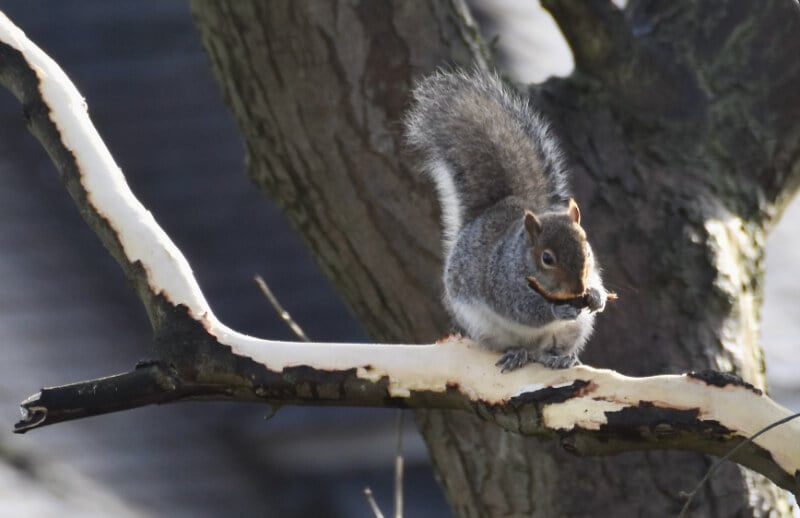
150 years ago North American grey squirrels were first released in England, causing devastating problems for nature today.
One pair was released into a park near Macclesfield in Cheshire in 1876 as a novelty species. They escaped. The UK population of native red squirrels at that time was approximately three million.
Today, greys number between 2.5 and 2.7 million and the red population has plummeted to around 287,000, with approximately 39,000 in England and Wales and the majority of the balance in Scotland.
Greys are the main culprit for this collapse. They are larger than the reds – 500g vs 300g – breeding faster, with up to eight kittens twice a year – and they outcompete them for food and territory.
This pressure is compounded by the highly infectious squirrel pox carried by some greys. It is harmless to them but fatal to reds, wiping out entire colonies painfully within a matter of weeks, driving them towards extinction.
A primary objective of the Red Squirrel Survival Trust (RSST) and its sister organisation the UK Squirrel Accord (UKSA), is funding on-going, ground-breaking research at the government’s Animal & Plant Health Agency (APHA) to develop a benign contraceptive for grey squirrels that breaks down in the body so that the squirrels’ predators and scavengers are unaffected by it.
The work also involves the development of a safe delivery system that only greys can access, ensuring non-target species have no exposure to the contraceptive.
The scientists’ models show that the introduction of this immuno-contraceptive system results in a landscape scale collapse in grey numbers. It is estimated it will be available to woodland and forestry owners, farmers, land owners and others in around five years.
The threat from grey squirrels also impacts UK woodland. Each year they cause an estimated £40 million of damage, largely by bark stripping native hardwood trees such as oak, birch, beech and sycamore. The cost is from lost timber value, enforced tree replacement and reduced carbon sequestration. This is endangering the government’s tree planting strategy, a key factor in the aim for Britain to be carbon neutral by 2050, which involves planting 1.5 billion new trees.
The Forestry Commission (England) estimates that grey squirrel damage could cost £1.1 billion over the next 40 years.
A spokesman for the RSST says: “Britain and Ireland’s familiar woodland landscape is at risk from the exponential increase in the grey squirrel population, the virulent disease they carry, and the serious damage they cause to trees. If unchecked, they will exacerbate the damaging effects of climate change, undermining national efforts to mitigate it throughout the British Isles. Restoring the natural balance in favour of the native red squirrel will help to make increased carbon capture in woodland a practical reality. The red squirrel must be allowed to flourish, giving visible proof of the health and viability of our native woods and forests.”